

Sri Lankan food is one of the most underrated cuisines on Earth. Ask most people outside the island what they know about it and the answer is often a vague reference to curry — which is roughly equivalent to describing French cuisine as bread. The food of Sri Lanka is extraordinarily varied, deeply regional, technically complex and, at its best, some of the most flavourful and satisfying cooking anywhere in Asia.
The challenge for first-time visitors is knowing what to order, where to find the real version of each dish and how to navigate a cuisine that can range from gentle coconut-milk sweetness to a heat level that demands respect. This guide is written by our team, who eat Sri Lankan food every single day. It covers the dishes you absolutely must try, the ones that can catch you off guard, exactly where to find the best versions and what our guests consistently say are their most memorable food experiences on tour.
What You Need to Know First
Heat level: Authentic food can be very spicy — ask for mild if needed
Vegetarians: Excellent options everywhere — dhal, jackfruit, vegetable curries
Cost: Local restaurants are extremely cheap — LKR 300–600 per meal
Best breakfast: Hoppers and string hoppers — the greatest Sri Lankan mornings
Best guide: Your driver knows the best spots — always ask him first
Tap water: Never drink tap water — stick to bottled or purified
The Essential Dishes — What You Must Try
These are the dishes that define Sri Lankan cuisine. Miss any one of these and you have not properly eaten in Sri Lanka.
Rice and Curry
Bath saha wiyanjana
Heat
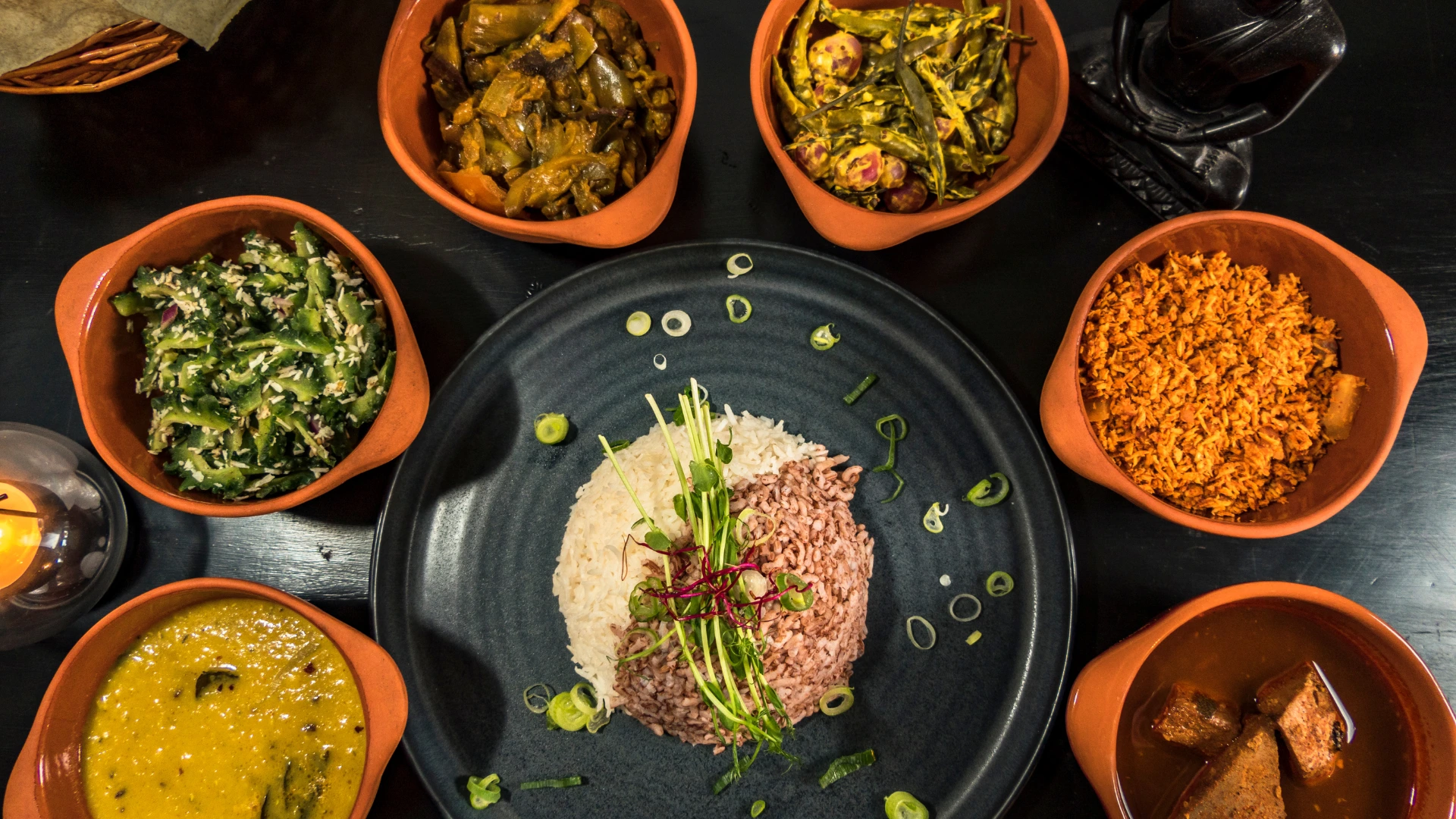
The soul of Sri Lankan eating. Rice and curry is not a single dish — it is an entire philosophy of the table. Steamed rice arrives surrounded by a minimum of four or five small dishes: a fish or meat curry, a vegetable curry, dhal (lentils cooked with turmeric and coconut milk), coconut sambol (fresh grated coconut with red onion and chilli), and often a pol sambol or papadum on the side. Every cook, every region and every family makes each element differently. The same dish eaten in Kandy and in Jaffna will taste completely unlike each other.
Insider Tip
The best rice and curry is eaten by hand — mix each element into the rice with your right hand, building each mouthful with a different combination. This is not a local quirk; it is the correct way to eat it and it genuinely tastes better. Most local restaurants will find it entirely natural.
Where to Find It
Every local "hotel" (small canteen), roadside restaurant and family home on the island. Avoid tourist restaurants that serve it as a single-plate portion — find the places where it arrives in five small dishes.

Hoppers (Appa)
Appa
Heat
Hoppers are bowl-shaped pancakes made from a fermented rice flour and coconut milk batter, cooked in a small hemispherical wok. The result is crispy and lacy at the edges and soft and spongy at the base. An egg hopper has a whole egg cracked into the centre as it cooks, creating a fried egg sitting in the base of the bowl. Served with coconut sambol, dhal or a curry on the side, hoppers are the quintessential Sri Lankan breakfast and one of the most immediately beloved things visitors eat on the island.
Insider Tip
Order egg hoppers on your first morning in Sri Lanka. Eat them with coconut sambol and a smear of pol sambol on the side. Do not leave Sri Lanka without having at least three hopper breakfasts.
Where to Find It
Hopper restaurants (typically open from 6am to noon) in every town. In Kandy, ask your driver or guide for their favourite hopper spot — every Sri Lankan has a strong opinion about where the best ones are made.
String Hoppers (Idiyappam)
Idiyappam
Heat
String hoppers are an entirely different thing from regular hoppers despite the name. They are delicate, pressed rice noodle spirals — made by pushing rice flour dough through a mould — steamed until soft and served in stacks of four or five. They are eaten with coconut milk (sometimes sweetened), a vegetable curry and dhal. String hoppers are milder and softer than egg hoppers and are a brilliant choice for visitors who want a gentler introduction to the Sri Lankan breakfast table.
Insider Tip
String hoppers with coconut milk and jaggery (unrefined palm sugar) is the sweet version eaten by children and enjoyed by most adults who try it. Ask for this if you want to taste the sweeter side of the breakfast table.
Where to Find It
The same hopper restaurants and local breakfast spots as regular hoppers. Often served as a set with both hoppers and string hoppers so you can try both in the same sitting.
Kottu Roti
Koththu Rotti
Heat
Kottu roti is Sri Lanka's greatest street food — and one of the most satisfying things to eat at any time of day or night. Flatbread (roti) is shredded into rough pieces on a hot iron griddle and stir-fried with egg, vegetables, meat or seafood, curry sauce and spices, chopped and mixed with two large metal blades simultaneously in a technique that creates a rhythmic clattering sound audible from several streets away. Every kottu spot has its own sound, its own spice level and its own version.
Insider Tip
The sound of kottu being made — the metallic clatter of the blades on the griddle — will follow you across Sri Lanka and you will find yourself walking toward it instinctively after a few days. This is the correct response. Follow the sound.
Where to Find It
Street food stalls and local restaurants from late afternoon onward, particularly in towns. Ella, Kandy and Colombo all have excellent kottu options. It is significantly better from a local stall than from a tourist restaurant.

Dhal Curry (Parippu)
Parippu
Heat
Sri Lankan dhal curry is a revelation for visitors who assume lentils are a side note. Red lentils cooked slowly with turmeric, cumin, curry leaves and then finished with a tempering of mustard seeds, dried red chillies and shallots fried in coconut oil — the tempering added at the last moment — creates a dish of extraordinary depth. It is eaten at virtually every Sri Lankan meal as one of the side curries, and its mild creaminess provides the perfect counterpoint to the hotter elements of the rice and curry spread.
Insider Tip
If you find the curries too hot, dhal with coconut sambol stirred into rice is both delicious and a reliable way to moderate the heat level. Most hopper restaurants serve dhal as the default accompaniment.
Where to Find It
Part of every rice and curry meal throughout the island. Also served independently with hoppers, string hoppers and roti at breakfast.
Coconut Sambol (Pol Sambol)
Pol Sambol
Heat
Pol sambol is the essential Sri Lankan condiment — freshly grated coconut mixed with red onion, green or dried chilli, lime juice and Maldive fish (dried tuna flakes). It is eaten with every meal, at every time of day, across every region of the island. The combination of fresh coconut sweetness, sharp onion, acidic lime and chilli heat is one of the most perfectly calibrated flavour combinations in any cuisine. It is also the item most visitors try to recreate at home and can never quite get right without Sri Lankan coconut.
Insider Tip
Pol sambol is made fresh at every meal and varies in heat level significantly. If it looks very red, it is likely hot. If it looks pale and white-dominated, it will be milder. The most important thing is to always have some with whatever else you are eating.
Where to Find It
Comes automatically with rice and curry, hoppers and most other Sri Lankan meals. You do not need to order it specifically — it simply appears on the table.
Fish Ambul Thiyal
Ambul Thiyal
Heat
Ambul thiyal is the signature fish dish of the southern coast — dry-cooked tuna (or other firm fish) with goraka (a sour tamarind-like fruit), black pepper, dried chillies and a generous amount of curry leaf and pandan. The goraka gives the fish a distinctive, sour, deeply savoury character unlike any other fish preparation. It is cooked almost dry rather than in sauce and the flavour is intensely concentrated. This is Sri Lankan home cooking at its most confident.
Insider Tip
This dish is most authentic in southern coastal towns — Galle, Matara, Mirissa and Weligama. Ask your driver whether the restaurant you are visiting makes their own — a home-style ambul thiyal is significantly different from the tourist version.
Where to Find It
Southern coastal restaurants and local "hotels" from Galle to Mirissa. Less common in Kandy and the Cultural Triangle — the further south you travel, the better it becomes.
Lamprais
Lomprijst
Heat
Lamprais is one of the most distinctive dishes of the Sri Lankan Burgher community — a Dutch colonial legacy that has become a genuinely Sri Lankan classic. Rice, two or three curries, a frikkadel (Dutch-style meatball), blachan (shrimp paste) and seeni sambol are wrapped together in a banana leaf parcel and baked until the leaf infuses the entire package with its characteristic grassy, slightly smoky flavour. The result is a self-contained meal of remarkable depth.
Insider Tip
Lamprais is a Burgher community dish and is best found in Colombo in established Dutch Burgher Union restaurants and old-school Sri Lankan bakeries rather than in tourist restaurants. It is worth specifically seeking out in Colombo.
Where to Find It
Colombo — particularly in the Cinnamon Gardens and Bambalapitiya areas. Old-established local bakeries and Dutch Burgher community restaurants.
What to Drink — Ceylon Tea, King Coconut and More
Sri Lanka produces some of the finest tea in the world and the drinking culture around it is a genuine part of daily life, not a tourist performance. Beyond tea, there are several drinks that are essential to the Sri Lankan food experience.
Ceylon Tea (Thé)
Sri Lanka's greatest export and one of the world's finest teas. Served strong, with condensed milk or fresh milk and often quite sweet. In the hill country around Kandy and Ella, visit a tea factory and drink it fresh from leaves picked that morning — the difference from any tea you have had before is startling.
King Coconut Water (Thambili)
The bright orange king coconut is one of the most refreshing things on Earth in the Sri Lankan heat. Found at roadside stalls everywhere — the seller opens it with a machete and you drink the sweet, isotonic water directly through a straw. It is genuinely hydrating and safe to drink. Order one every morning.
Fresh Lime Soda
Fresh lime juice with soda water and a choice of sweet or salty seasoning. Ordered as "sweet, salty or both" — the both option (half sweet, half salty) is the local favourite and one of the most refreshing drinks in any climate. Found in every restaurant on the island.
Toddy and Arrack
Toddy is fermented coconut flower sap — fresh toddy is mildly alcoholic and refreshing; aged toddy ferments into the base for arrack, Sri Lanka's indigenous spirit. Ceylon arrack with ginger beer (a "ginger beer and arrack") is the national sundowner and tastes exactly right on a warm Mirissa evening.
Where to Eat — The Real Guide
The single most common food mistake visitors make in Sri Lanka is eating in tourist-facing restaurants when extraordinary local food is available twenty metres down the same road for a fraction of the price. Here is exactly where to eat.
Where to Find the Best Sri Lankan Food
Local "Hotels" (Small Canteens)
In Sri Lanka, a small local restaurant is called a "hotel" regardless of whether it serves accommodation. These are the canteen-style spots with rice and curry served from large metal pots, where you point at what you want and it is scooped onto a banana leaf or plate. This is the most authentic, cheapest and consistently delicious dining option on the island. Prices are typically LKR 250–500 for a full meal.
Roadside Stalls and Market Vendors
The best street food in Sri Lanka — kottu, hoppers, roti, samosas and short eats — is found at roadside stalls, particularly in the late afternoon and evening. Follow the crowds and the smell. If a stall is empty at meal time, walk past it. If it has a queue, join the queue.
Ask Your Driver or Guide
This is the most important food advice in this entire article. Your Sinhagiri driver has eaten at every town on your route many times. He knows which local hotel makes the best rice and curry in the area, which stall has the freshest hoppers and which kottu spot has been consistent for years. Ask him every single day where he recommends for lunch. He will tell you honestly.
Village Cooking Experiences
On some of our tours and extensions, we arrange for guests to eat with a local family or participate in a cooking class. These experiences — eating food cooked in a domestic kitchen from spices grown in the back garden — are consistently rated the most memorable food experiences of the entire trip. Ask us to arrange this when you book.
Avoid These Situations
Tourist restaurants on the main drag with English menus, laminated pictures of food and touts outside the door. Hotel buffets that serve a Western interpretation of rice and curry. Any "curry" that arrives as a single pale sauce. These are not representative of Sri Lankan food and you will be disappointed. Walk one street back from the tourist strip and you will find the real thing.
Food by Region — What to Eat Where
Sri Lankan food changes significantly as you travel around the island. Each region has its own specialities, its own dominant ingredients and its own cooking traditions shaped by geography, history and community. Here is what to look for in each area of your tour.
Kandy & the Hill Country
Visit a working tea factory above Kandy and drink tea within minutes of the leaves being processed. No other tea experience on Earth compares.
The Cultural Triangle (Sigiriya, Dambulla, Polonnaruwa)
The Cultural Triangle is in the dry zone — it gets very hot. King coconut water from roadside stalls is both hydrating and delicious. Drink at least one per day.
Ella & the Southern Highlands
Ella has some of the best cafe food in Sri Lanka alongside excellent local options. The combination of highland air and good coffee makes the cafe culture here genuinely outstanding.
Yala & the South Coast
The seafood on the south coast is exceptional. Ask your driver to stop at a beachside local restaurant between Galle and Mirissa — you will eat some of the best fish curry of your life for under LKR 600.
Mirissa & the Beach Towns
Walk one street back from the beachfront tourist restaurants and you will find small local places serving fresh fish at a fraction of the beach-facing prices. The food is identical or better.
Vegetarians, Vegans and Dietary Requirements
Sri Lanka is an excellent destination for visitors with dietary requirements, particularly vegetarians. The Buddhist tradition on the island means that vegetarian food is deeply embedded in the cuisine and not treated as an afterthought.
Vegetarians
Excellent throughout Sri Lanka. Rice and curry always includes multiple vegetable curries, dhal and sambol. Hoppers, string hoppers and kottu are all available vegetarian. The highland region around Kandy and Ella is particularly strong for vegetarian options.
Vegans
Very manageable. Most Sri Lankan food is cooked in coconut oil rather than dairy, and coconut milk replaces dairy in most curries. Be aware that some dishes contain Maldive fish (dried tuna) in sambols and some curries — ask specifically and the kitchen will adjust.
Gluten-Free
Rice-based Sri Lankan food is naturally gluten-free. Hoppers, string hoppers, rice and curry and most traditional dishes contain no wheat. Kottu roti uses wheat flour roti — request rice-based substitutes if needed.
Children's Food
Sri Lankan food can be very spicy for young children. String hoppers with sweet coconut milk, plain rice with dhal, egg hoppers and pol roti are all mild and widely enjoyed by children. Tell your guide your children's spice tolerance and the kitchen will prepare accordingly.
Food Safety — What to Know
The Essential Rules
Frequently Asked Questions
How much does food cost in Sri Lanka?
Eating locally in Sri Lanka is extremely cheap. A full rice and curry meal at a local hotel costs LKR 250–600 (approximately USD 0.75–2.00). Kottu roti from a street stall is LKR 300–500. A full hopper breakfast costs LKR 150–300. A pot of Ceylon tea is LKR 50–100. Tourist-facing restaurants cost significantly more — LKR 1,500–4,000 per main — but even these are inexpensive by most Western standards.
Can I find Western food in Sri Lanka?
Yes, Western food is available in all the major tourist areas — Colombo, Kandy, Ella, Galle and the beach towns all have restaurants serving pasta, burgers, sandwiches and pizza. However, we strongly encourage every visitor to spend at least the majority of their meals eating Sri Lankan food — it is one of the most rewarding parts of the travel experience and the authentic local food is far better than any tourist version of it.
Is Sri Lankan food safe for people with nut allergies?
Sri Lankan food makes extensive use of coconut (coconut milk, grated coconut, coconut oil) — if you have a tree nut or coconut allergy this is critical to communicate. Cashews are used in some rice preparations and certain curries. Always inform your guide and the restaurant in advance and ask specifically about each dish. Our guides will translate clearly to the kitchen on your behalf.
What is the best meal of the day in Sri Lanka?
Breakfast is the argument for most visitors — egg hoppers or string hoppers at a local breakfast spot, with coconut sambol and fresh tea, eaten before a morning of sightseeing is a genuinely perfect meal. Our guides consistently report that guests who eat local breakfasts enjoy their mornings significantly more than those who default to hotel buffets.
The Best Food in Sri Lanka Is
Waiting Down a Side Street.
Our guides and drivers know where all the best food is — every town, every stop, every region of the island. When you travel with Sinhagiri Tours, real Sri Lankan food is part of every day. Contact us to start planning your trip.
Local food at every stop
Driver knows the best spots
Expert guide throughout


